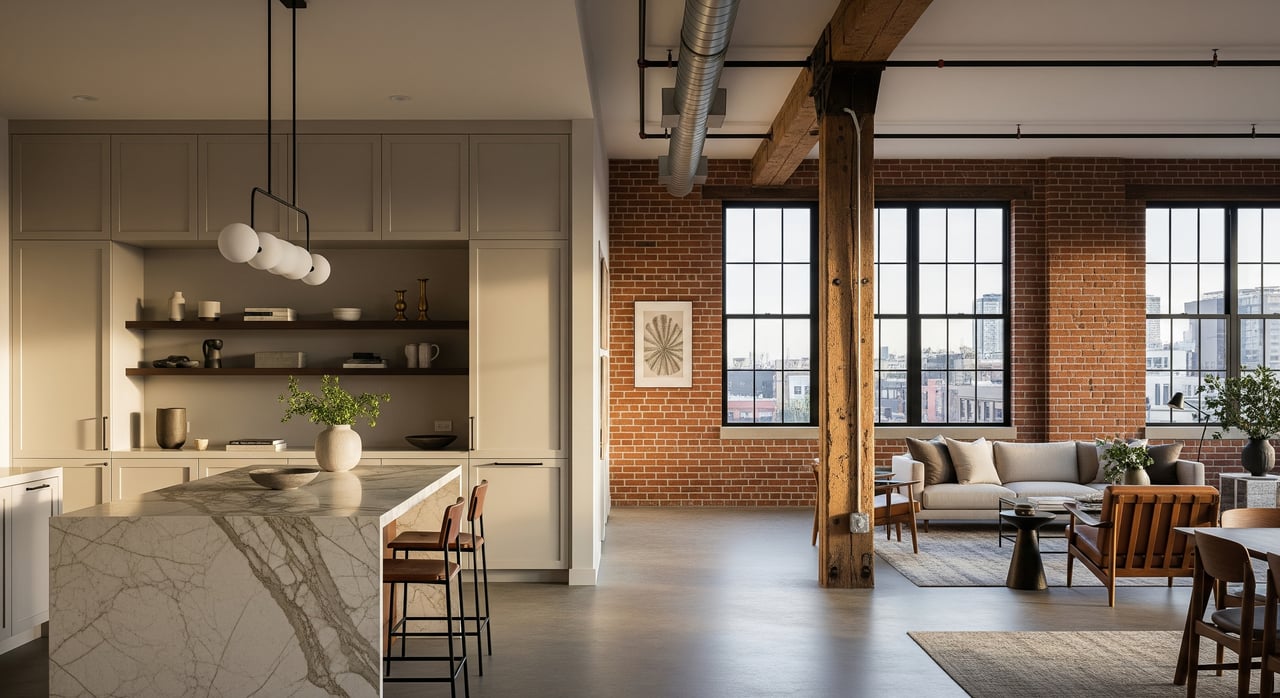
Is a West Loop loft on your wish list, but you’re not sure whether a soft loft or a true loft fits you better? You’re not alone. These two styles often sit on the same block and look similar online, yet they live very differently in real life. In this guide, you’ll learn how construction, ceilings, windows, sound, HVAC, and building systems shape comfort, costs, and resale value so you can choose with confidence. Let’s dive in.
Soft loft vs true loft: quick definitions
A true loft, often called a hard loft, comes from a conversion of an industrial or commercial building. Think warehouses and factories that were modernized for residential living while keeping their original structure. You’ll notice heavy timber or steel beams, brick or masonry walls, and large open floor plates.
A soft loft is a purpose-built residential building designed to deliver the loft look. You still get open layouts, higher ceilings than a typical condo, and industrial-inspired finishes. Behind the scenes, it functions like a modern condo with standard mechanical systems, insulation, and sound separation.
In the West Loop, you’ll find both styles. Historic conversions cluster near former warehouse corridors, while newer developments offer soft-loft design with amenity packages. Your choice comes down to how you want the space to feel and how you want the building to perform.
Key features that shape daily living
Ceiling height and volume
True lofts commonly feature very high ceilings that can climb well above 12 feet, sometimes reaching 20 feet or more. The volume feels dramatic and can support mezzanines or flexible layouts. That vertical space is a big part of the hard-loft appeal and often influences price.
Soft lofts typically offer ceilings in the 9 to 11 foot range. The rooms feel open, but there is less vertical drama. Double-height spaces may appear in select penthouses or duplex units, but they are less common overall.
Windows and natural light
True lofts draw light through expansive factory-style windows with deep masonry openings. Corner units can be especially bright. Depending on the conversion, windows may have been replaced or remain closer to the original style, which can affect insulation and sound.
Soft lofts usually include modern glazing designed for energy performance. You may see floor-to-ceiling windows, contemporary frames, and improved thermal comfort. The look is sleek, with performance that aligns with current building standards.
Exposed elements and character
True lofts showcase authenticity. Exposed brick, heavy timber or steel beams, and visible ducts often come from the original structure. These details are architecturally significant and are a central reason buyers seek hard lofts in the West Loop.
Soft lofts use design choices to echo that industrial feel. You might see exposed concrete ceilings, decorative brick veneer, and planned ductwork. The aesthetic is intentional and can be very attractive, but it is not original to a past industrial use.
Sound and privacy
True lofts vary with sound. Masonry and heavy concrete or timber floors can block many airborne noises, yet soundproofing between converted units may be inconsistent. Open plans can also reduce privacy inside the home since there are fewer interior partitions.
Soft lofts are built to modern multi-family standards, which typically means designed floor and ceiling assemblies and insulation to meet current sound requirements. Performance still depends on the specific building and its construction quality.
HVAC and overall comfort
True loft conversions can include centralized systems or in-unit solutions, depending on when and how the building was updated. You may find PTACs, minisplits, or forced-air setups. Control and billing can vary by building, which affects both comfort and monthly costs.
Soft lofts usually deliver modern, code-compliant HVAC and ventilation with predictable insulation values. You’re more likely to have individually metered systems and familiar equipment types, which simplifies maintenance planning.
Fire safety and egress
True lofts must meet modern safety codes at conversion, including sprinklers, alarms, and proper egress. Some historic projects received variances, so it is important to verify current compliance and any recent upgrades.
Soft lofts are typically designed to meet current codes from day one. That design consistency can add peace of mind for many buyers.
How features shape price, HOA, and resale in the West Loop
Pricing dynamics
In the West Loop, authenticity is a value driver. Very high ceilings, original brick and timber, large historic windows, and open floor plates often command higher per-square-foot pricing. Limited supply of dramatic hard-loft spaces can further support premiums.
Layouts and systems matter too. Inefficient floor plans, dated mechanicals, or poor sound separation can narrow the buyer pool and soften prices. Soft lofts compete well by offering the loft look paired with modern systems and finishes, often at a more predictable price point.
HOA dues and what moves them
Monthly HOA dues are tied to building operations more than the “soft vs true” label. Centralized mechanical systems, extensive common amenities, and large historic façades that need ongoing maintenance tend to increase dues. Roof decks, doormen, and parking garages also add to operating costs.
Buildings with in-unit HVAC and fewer amenities often post lower HOAs. That can shift more responsibility to you for individual utilities and maintenance. Higher HOA dues can bring convenience and predictable building care, while lower dues can keep monthly costs down but require more personal oversight.
Resale and financing
Hard lofts with strong character in well-run buildings can be highly marketable in the West Loop, especially given the area’s dining, transit access, and employer base. That said, unique layouts and niche finishes can reduce the number of buyers who are a perfect fit.
Soft lofts may be easier to compare with standard condos, which can simplify pricing and appraisal. Financing in converted buildings can require extra documentation, so get lender input early if you are targeting historic or nonstandard projects. Parking and storage remain important in resale across both categories.
Due diligence checklist for West Loop lofts
Building-level questions
- Review the condo association’s bylaws, budget, reserve study, and recent meeting minutes. Look for planned capital projects such as façade tuckpointing, roof work, window replacement, or elevator upgrades.
- Ask how major systems are structured. Clarify whether HVAC and hot water are centralized or in-unit, and who pays for what.
- Confirm insurance coverage and what the association covers versus unit-owner responsibilities.
- Check for any recent or upcoming special assessments tied to façade, roof, or mechanical projects.
In-unit inspection list
- Structural and envelope: Look for moisture staining on brick, ceilings, or walls. Test windows for drafts and examine their condition and replacement history.
- Floors and spans: Assess floor levelness and any signs of deflection that can occur with large open spans.
- HVAC and ventilation: Identify the system type and age. Ask for service records, verify thermostat control, and confirm whether kitchen and bath ventilation exhausts to the exterior.
- Fire and life safety: Verify sprinkler coverage in both unit and common areas. Confirm alarm systems and egress routes.
- Sound and layout: Visit at different times to gauge street and neighbor noise. Evaluate bedroom placement and privacy in open layouts.
- Utilities and metering: Clarify how water, gas, and electric are billed. Confirm whether utilities are individually metered or split by the association.
- Legal and use: Verify the property type and any rental caps or short-term rental restrictions that could affect future plans.
Financial and loan steps
- Ask your lender about project eligibility for conventional financing, especially on historic conversions.
- Review the reserve study and financials. A low reserve balance paired with an aging envelope can signal the risk of near-term assessments.
- Price with systems in mind. Older windows, aging HVAC, or masonry repairs can affect both your offer strategy and post-close budgets.
Which loft style is right for you?
Choose a true loft if authenticity and volume are your top priorities and you are comfortable with the quirks that can come with historic conversions. The visual impact, brick and timber, and unique layouts can be worth the trade-offs.
Choose a soft loft if you want the industrial aesthetic paired with modern building performance. You will likely enjoy more predictable HVAC, insulation, and sound separation, along with amenities common in newer developments.
Either way, focus on how you live. Consider your tolerance for street activity, your need for quiet zones in an open plan, and your preferences for monthly HOA predictability versus in-unit control. Then weigh the building’s long-term maintenance outlook and reserves so your investment holds up over time.
Ready to tour both styles and compare real numbers on price, HOA dues, and resale potential in the West Loop? Reach out to schedule a consult and walk through pros and cons in person. Let’s connect through Unknown Company and start narrowing your shortlist today.
FAQs
What is a true loft in Chicago and how is it created?
- A true loft, also called a hard loft, is a residence converted from a former industrial or commercial building that retains original elements like brick, heavy timber or steel, and large historic windows.
Do soft lofts usually have lower HOA dues in the West Loop?
- Not always, since dues depend on building systems and amenities; in-unit HVAC and minimal common areas can reduce dues, while centralized systems and extensive amenities can increase them.
How do high ceilings affect heating and cooling costs in lofts?
- Taller ceilings increase air volume, which can raise heating and cooling demand; performance also depends on window efficiency, insulation, and whether the HVAC system is modern and well maintained.
What should I check with historic windows in a West Loop hard loft?
- Inspect for drafts, confirm replacement or restoration history, and ask about permits and façade impacts; window condition affects comfort, noise, and potential future costs.
Are hard lofts harder to finance than soft lofts in Chicago?
- Financing can be more documentation heavy for conversions or nonstandard projects, so involve your lender early to confirm project eligibility and required condo documents.
Which type typically resells faster in the West Loop?
- Marketability depends on the specific building, layout efficiency, condition, amenities, and location; well-maintained hard lofts with strong character and well-run soft lofts both perform when priced strategically.
