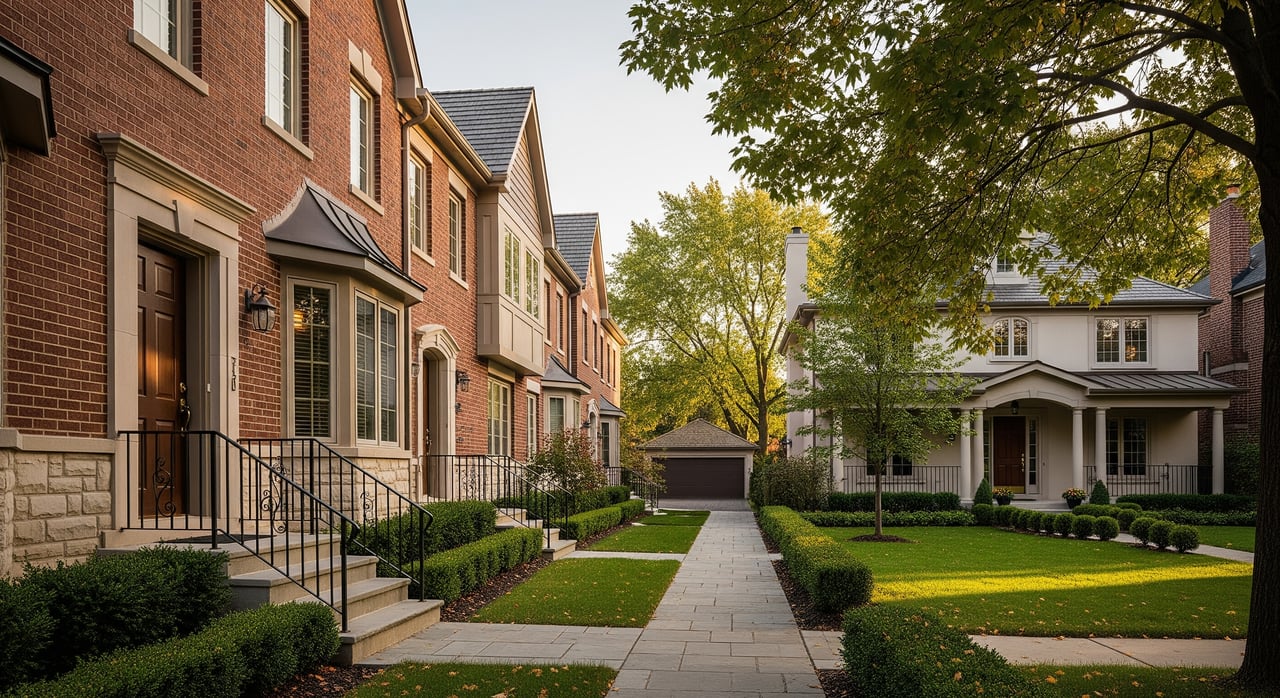
Trying to decide between a townhome and a single-family home in Mount Prospect? You are not alone. Many buyers balance budget, lifestyle, and long-term value when they compare these two options. In this guide, you will learn how costs, rules, privacy, and resale differ so you can choose confidently. Let’s dive in.
Quick snapshot: key differences
Mount Prospect townhomes often have a lower entry price than single-family homes in the same area. You trade land and some exterior control for shared services and a monthly HOA fee. Single-family homes usually cost more upfront and require you to handle all maintenance, but you gain more privacy and flexibility outside.
Location patterns matter. Townhomes often cluster near downtown and the Metra station, or along main corridors with higher density. Detached homes are more common on established residential blocks with larger lots and mature trees.
Costs: HOA vs maintenance, taxes, insurance
Townhome HOA fees
- What HOAs commonly cover: exterior maintenance, roof and siding, snow removal, landscaping, trash, common insurance, and reserves for future projects.
- What the fee level signals: higher fees may include more services and stronger reserves. Very low fees may mean limited services or the risk of special assessments later.
- Due diligence: request the HOA budget, reserve study, meeting minutes, recent or planned special assessments, insurance master policy, and delinquency rate. Review bylaws so you know which items you maintain versus the association.
Single-family maintenance
- You are responsible for the roof, exterior, landscaping, driveway, fencing, and all systems. Plan for routine upkeep and occasional big-ticket items.
- As a planning guideline, budget 1% to 3% of the home’s value annually for maintenance, adjusted for age and condition. This is an estimate, not a guarantee.
- Examples of larger costs: roof replacement, siding, exterior painting, driveway work, tree removal, sump pump or foundation repair, and HVAC replacement.
Property taxes in Cook County
- Property taxes are assessed by the county and vary by taxing district. Two similar homes can have different bills based on assessment and applicable exemptions.
- Before you buy, review the parcel’s assessed value and tax history through Cook County resources. Confirm whether homeowner exemptions are applied or available.
Insurance and utilities
- Insurance: townhomes often use an HO‑6 policy for interior and personal property while the association insures common elements. Single-family homes typically use an HO‑3 policy that covers the structure and contents. Confirm the HOA’s master policy scope so you can set proper coverage.
- Utilities: attached homes can have lower heating and cooling use due to shared walls. Always confirm whether utilities are individually metered or shared, and what the HOA covers.
Monthly cost worksheet
Use this template to compare total carrying costs. Add realistic estimates for your situation.
| Line item | Townhome | Single-family |
|---|---|---|
| Mortgage principal & interest | ||
| Property taxes | ||
| Insurance | ||
| HOA dues (if any) | ||
| Utilities | ||
| Maintenance reserve | ||
| Estimated total monthly |
Tip: compare the estimated total monthly column, not just the purchase price.
Lifestyle tradeoffs in Mount Prospect
Privacy and noise
- Single-family homes provide more separation, fewer shared walls, and better buffers for pets and outdoor activities.
- Townhomes share walls and common areas, which may increase noise transfer. Newer buildings may include sound mitigation, but confirm with your inspector.
Yard use and exterior changes
- Single-family homes give you more freedom to landscape, add decks, install fences, or consider accessory structures, subject to village permits and zoning.
- Townhomes typically have smaller yards or common grounds. Exterior changes often need HOA approval. Rules can cover grills, fencing, landscaping, and outdoor furniture.
Where you will find each option
- Townhomes and condos often cluster near downtown Mount Prospect and the Metra station, as well as along major corridors where density is higher.
- Single-family homes are common on established residential streets farther from commercial nodes, with larger lots and mature trees.
Parking and vehicle storage
- Single-family homes often include private driveways and garages, making it easier to store multiple vehicles and host guests.
- Townhome parking varies. You might see assigned spaces, shared lots, or private garages. Street parking rules may apply, so review association and village policies.
Commute and amenities
- Proximity to the Union Pacific Northwest Line and main roads often shapes housing options. Denser housing is common near stations, while detached homes tend to be farther out.
- Parks, schools, and shopping matter for both daily life and resale. Map your typical routine to see which locations best support your lifestyle.
Financing and resale considerations
Financing differences to know
- Townhomes or condos can require project-level approval for FHA or VA loans. Conventional financing may be available, but lenders will review HOA finances, insurance, and owner-occupancy ratios.
- Detached single-family homes usually have straightforward financing. If you plan to use FHA or VA for a townhome or condo, verify project eligibility early.
Resale prospects
- Single-family homes tend to attract a broader buyer pool, which can support liquidity in many suburban markets.
- Townhomes are popular with first-time buyers, downsizers, and commuters seeking lower maintenance. Resale value is sensitive to location, HOA health, and monthly fees.
Due diligence checklists
For townhomes
- Request: HOA budget, reserve study, 2 to 3 years of meeting minutes, insurance master policy, recent or planned special assessments, declaration/bylaws.
- Ask about: delinquency rates, pending litigation, owner-occupancy ratio, and any large capital projects in the pipeline.
- Confirm: what exterior items the HOA maintains and what you maintain, plus utility metering and any shared bills.
For single-family homes
- Inspection: prioritize roof, foundation and drainage, HVAC age and condition, electrical and plumbing, and any signs of water intrusion.
- Permits: review village records for past additions, decks, or other work. Confirm setbacks and local rules for future projects.
For both property types
- Taxes: review assessment and exemptions. Model potential changes after purchase.
- Schools and parks: verify boundaries and programs through official sources.
- Noise and traffic: visit at different times of day and week.
- Parking: confirm guest parking and any overnight restrictions.
How to choose with confidence
- Start with your priorities. If low maintenance and location near transit are top needs, a townhome may fit. If privacy and outdoor flexibility matter most, single-family is likely best.
- Compare total monthly costs using the worksheet. Add realistic maintenance reserves and update insurance and tax estimates before you offer.
- Align financing early. If you want FHA or VA for a townhome or condo, confirm project eligibility with your lender before touring.
- Consider resale. Think about buyer demand for your location and product type, as well as HOA health and fee trends.
Ready to run the numbers and see live options in Mount Prospect? Reach out to Jackie Manrique for a personalized search, HOA document review guidance, and a step-by-step plan from tour to close.
FAQs
What costs do Mount Prospect townhome HOAs usually cover?
- Most cover exterior maintenance, roof and siding, snow removal, landscaping, trash, common-area insurance, and reserves, but you should verify specifics in the HOA budget and bylaws.
How should I estimate single-family maintenance in Mount Prospect?
- A common planning rule is 1% to 3% of the home’s value per year, adjusted for the home’s age, systems, and condition, plus separate savings for major replacements.
Do property taxes differ a lot between similar homes?
- Yes, Cook County bills vary by assessment and taxing districts, so check the parcel’s tax history and confirm any exemptions to model your true annual cost.
Can I use FHA or VA for a Mount Prospect townhome?
- Possibly, but many townhome and condo projects require project-level approval, so confirm eligibility with your lender early in the search.
Where are townhomes most common in Mount Prospect?
- You will often find them near downtown and the Metra station or along major corridors with higher-density zoning, while detached homes dominate established interior neighborhoods.
What documents should I request from a townhome HOA before I buy?
- Ask for the budget, reserve study, 2 to 3 years of meeting minutes, insurance master policy, recent or planned special assessments, declaration/bylaws, delinquency and owner-occupancy data.
